A/B testing is the scientific view of testing two variants of a webpage, in order to compare the effectiveness of each. To the owners of e-commerce, it is the difference between making an educated guess as to what your customers desire and actually knowing what they want that they will click on the Buy button. Best A/B testing tools of Shopify stores are the foundation of any data-driven growth strategy in the competitive world of e-commerce. Selecting a tool is not merely about outward appearance, but it is about the selection of a partner which will give the accuracy, speed, and integration that will allow scale. We will deconstruct the top 15 tools to boost Shopify sales through A/B testing in this guide and transform raw data to an ROI of enormous proportions.
How A/B Testing Tools Help Shopify Stores
Starting with the installation of the appropriate tech stack is often the beginning of relying on a professional cro expert company. In the case of Shopify merchants, specific A/B testing tools offer a number of short-term benefits:
- Automation: They are involved in the heavy lifting of splitting traffic and tracking sessions.
- No-Code Implementation: The majority of the modern tools will enable you to modify the color of the buttons, the headlines or the layout using a visual editor without having to work with a single line of Liquid code.
- Data Integrity: These tools remove bots and guarantee statistical significance, therefore you do not make choices on the basis of noise.
- Faster Pivots: You can obtain conclusive answers in weeks or days, as opposed to months, to determine whether a change in theme was successful or not.
- Scalability: These tools reduce your Customer Acquisition Cost (CAC) by optimizing your existing traffic, enabling you to increase your spending on ads without going broke.
Key Features to Look for in Shopify A/B Testing Tools
There are many A/B testing tools that are compatible with Shopify, and before plunging into the list, you must understand which tool is the best to use depending on your needs. Find these required features:
- Deep Shopify Integration: The tool must be integrated with your Shopify checkout, product collections and customer tags.
- Performance Impact: There are scripts which slow down your site. Make sure that the tool has anti-flicker technology without compromising on the speed of the page.
- Visual vs. Code Editor: Novices should have a drag-and-drop editor, and experts can inject their own CSS/JS.
- Testing Diversity: Does it test product prices? Shipping thresholds? Entire landing pages?
- Analytics Dashboard: Find real-time reporting that is compatible with Google Analytics 4 (GA4).
- Pricing: Make sure the price is proportional to your traffic.
In case you do not know where to begin with, a professional cro audit could be taken to determine which aspects of your store are not performing optimally.
15 Best A/B Testing Tools for Shopify
Selecting the best A/B testing tools for Shopify stores requires a deep dive into how each software interacts with the Shopify liquid engine and your specific theme. Below is an expanded breakdown of the top contenders to help you decide which A/B testing tool is best for Shopify for your current stage of growth.
1. Shoplift
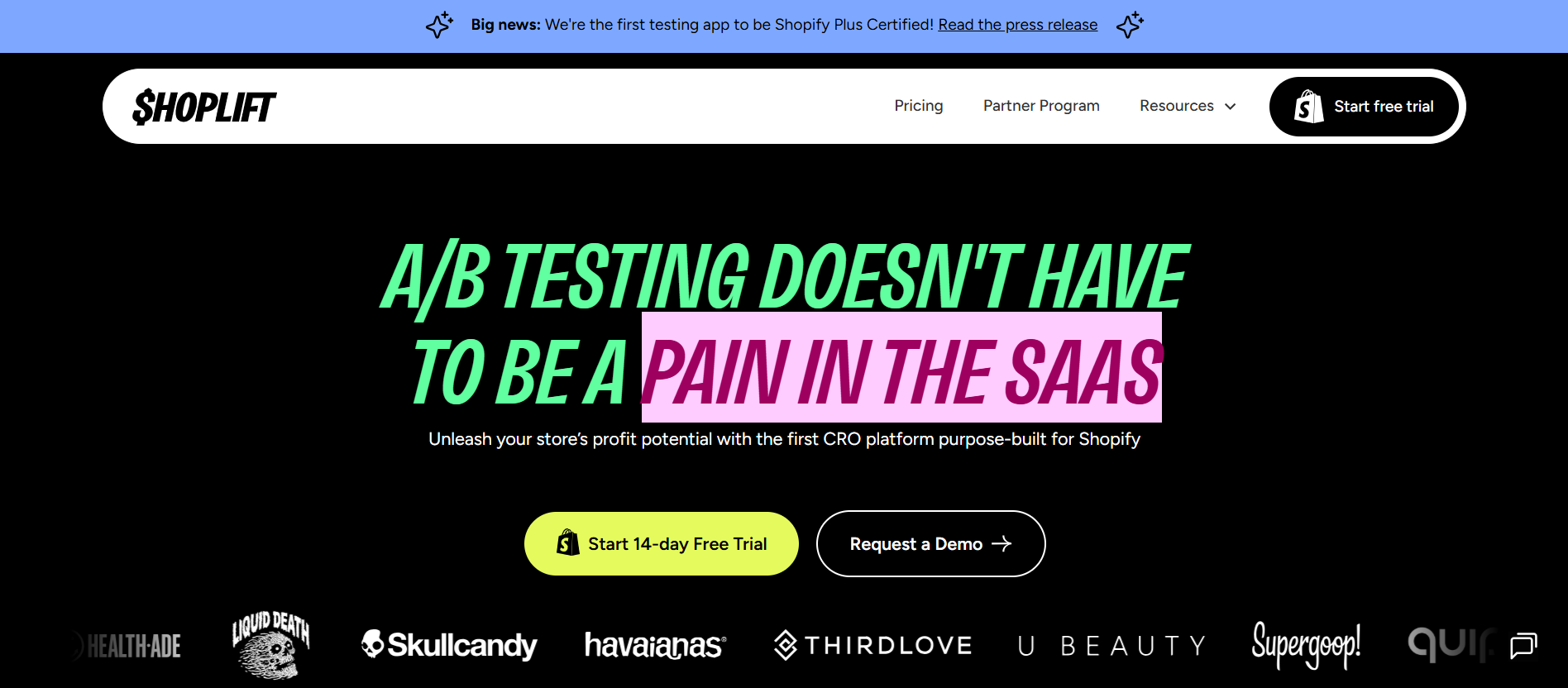
Shoplift is a performance-first platform that allows for step by step A/B testing without the technical debt. It is built to be “theme-native,” meaning it works within your existing Shopify theme sections.
Key Features: No-code visual editor, library of high-converting templates, and impact-free loading.
Best For: Design-conscious brands that want to test layouts without hiring a developer.
Unique Advantage: Because it uses Shopify’s native infrastructure, it avoids the “flicker” effect that plagues many other testing tools.
2. VWO (Visual Website Optimizer)
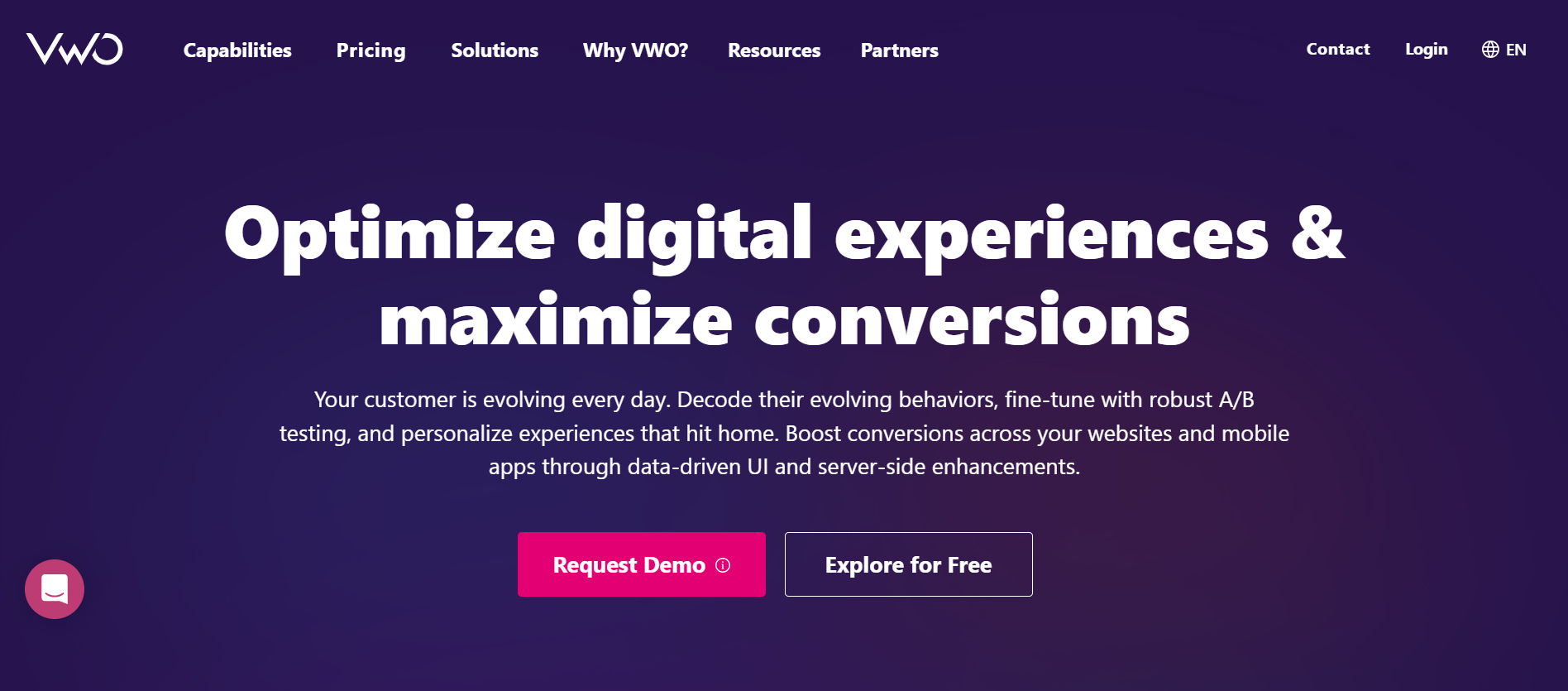
VWO is an all-in-one suite that is perfect for a cro expert company managing complex accounts. It goes beyond simple splits to offer a full research ecosystem.
Key Features: Multi-variate testing, split URL testing, and integrated heatmaps/session recordings.
Best For: Mid-market stores that have enough traffic to run multiple complex experiments at once.
Unique Advantage: Its “SmartStats” feature uses Bayesian statistics to give you a probability of outperforming the control much faster than traditional methods.
3. Optimizely
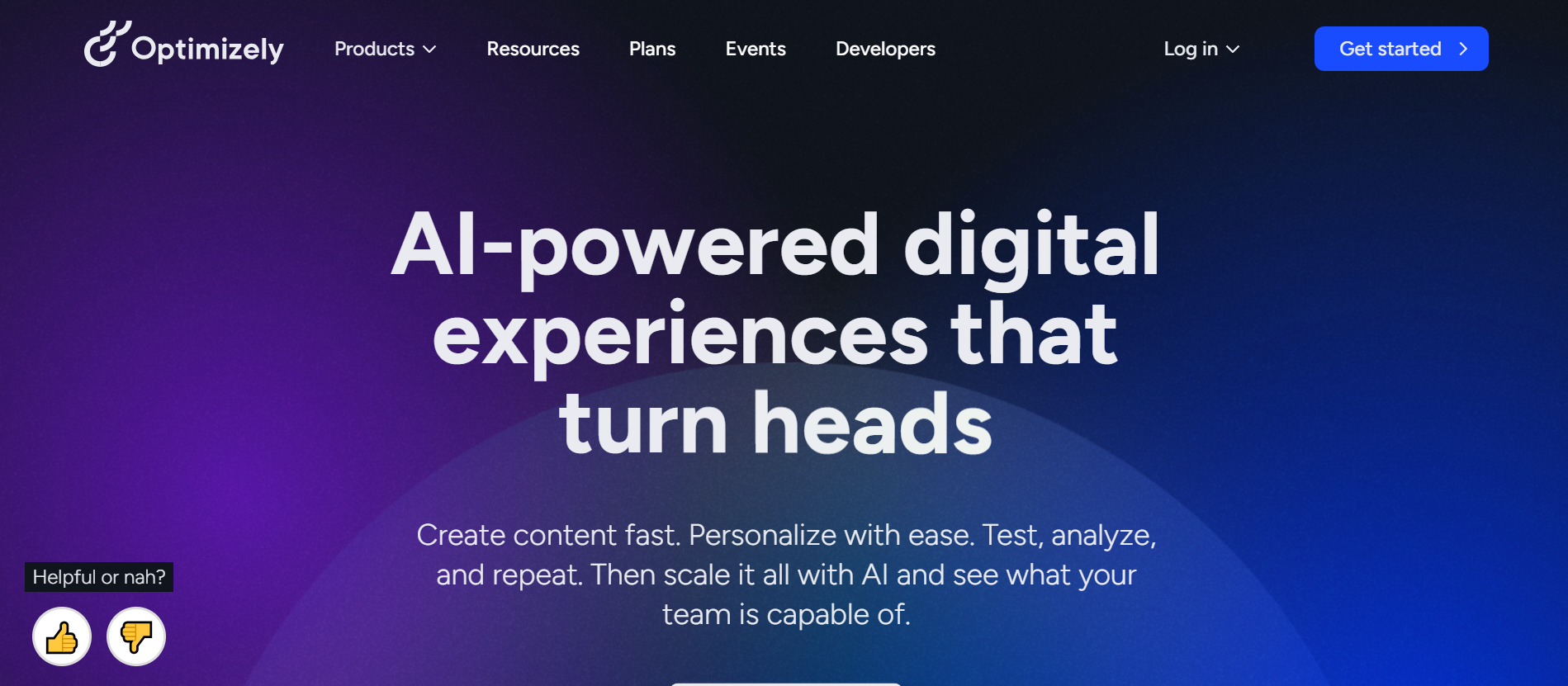
The heavyweight champion of the experimentation world, Optimizely is built for the “Experimentation Culture” found in massive global brands.
Key Features: Server-side testing, advanced audience targeting, and full-stack integration for mobile apps and web.
Best For: Enterprise-level Shopify Plus stores with dedicated data teams.
Unique Advantage: It offers the highest level of security and multi-user permissions, essential for large corporate structures.
4. Convert
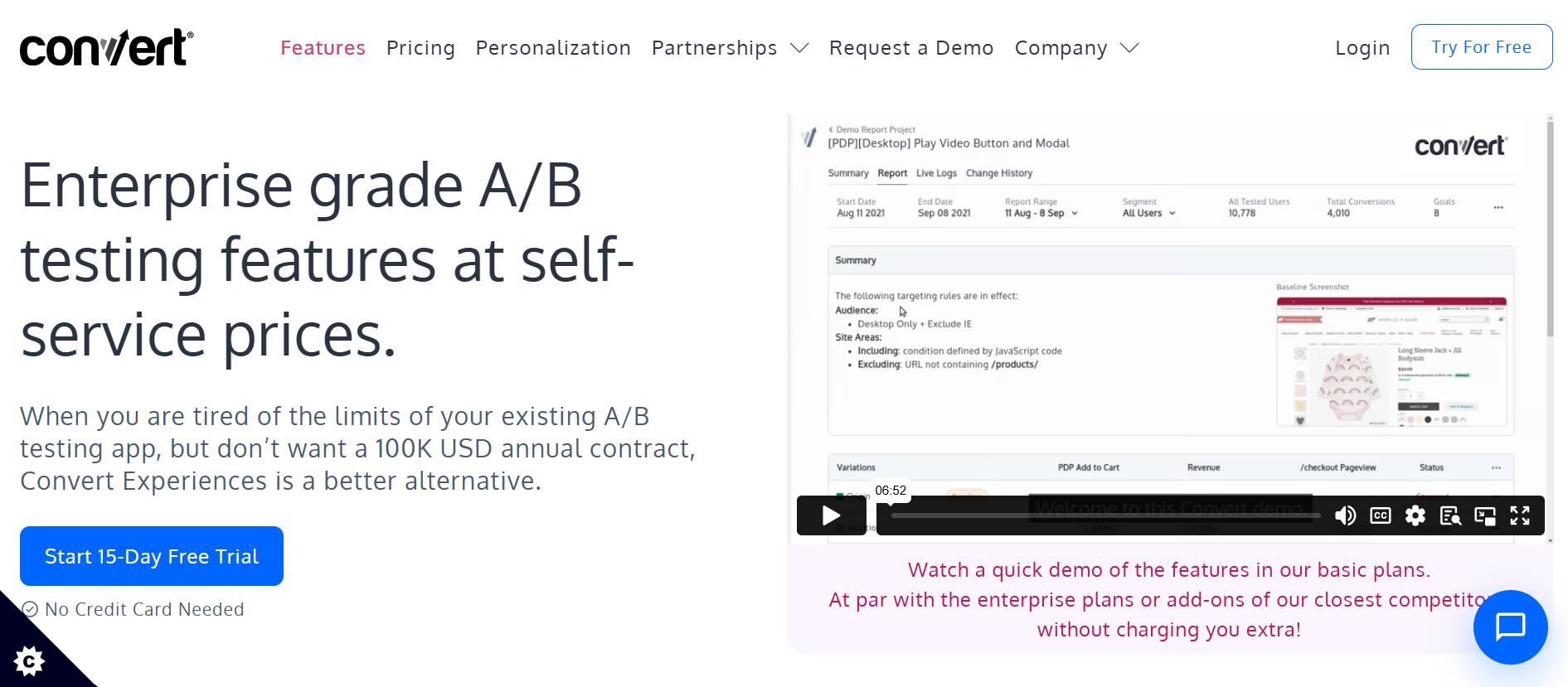
Convert is often cited as the top alternative to Optimizely because of its speed and ethical data practices. It is a favorite for those performing a cro audit on a budget.
Key Features: 40+ built-in integrations, JS/CSS editor for developers, and carbon-neutral hosting.
Best For: Agencies and privacy-focused brands that need enterprise power without the enterprise price tag.
Unique Advantage: They offer a “flicker-free” guarantee and some of the fastest technical support in the industry.
5. AB Tasty
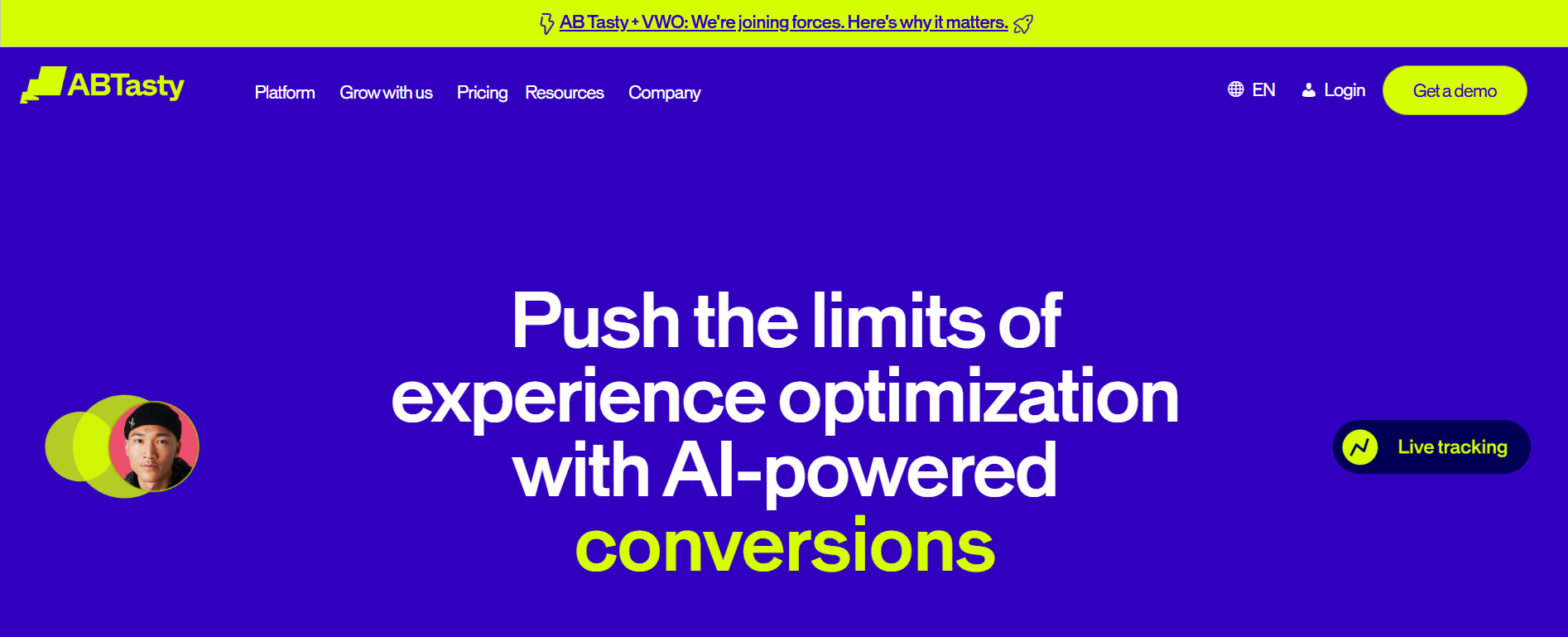
AB Tasty leans heavily into AI and personalization, helping you move from generic testing to a tailored user experience.
Key Features: AI-driven traffic allocation, “Image Match” testing, and pre-defined user segments (VIP, Returning, etc.).
Best For: High-traffic stores that want to personalize the journey for different customer personas.
Unique Advantage: Its “Nudge” library allows you to add social proof (like “5 people bought this in the last hour”) as part of your A/B tests.
6. Convertize
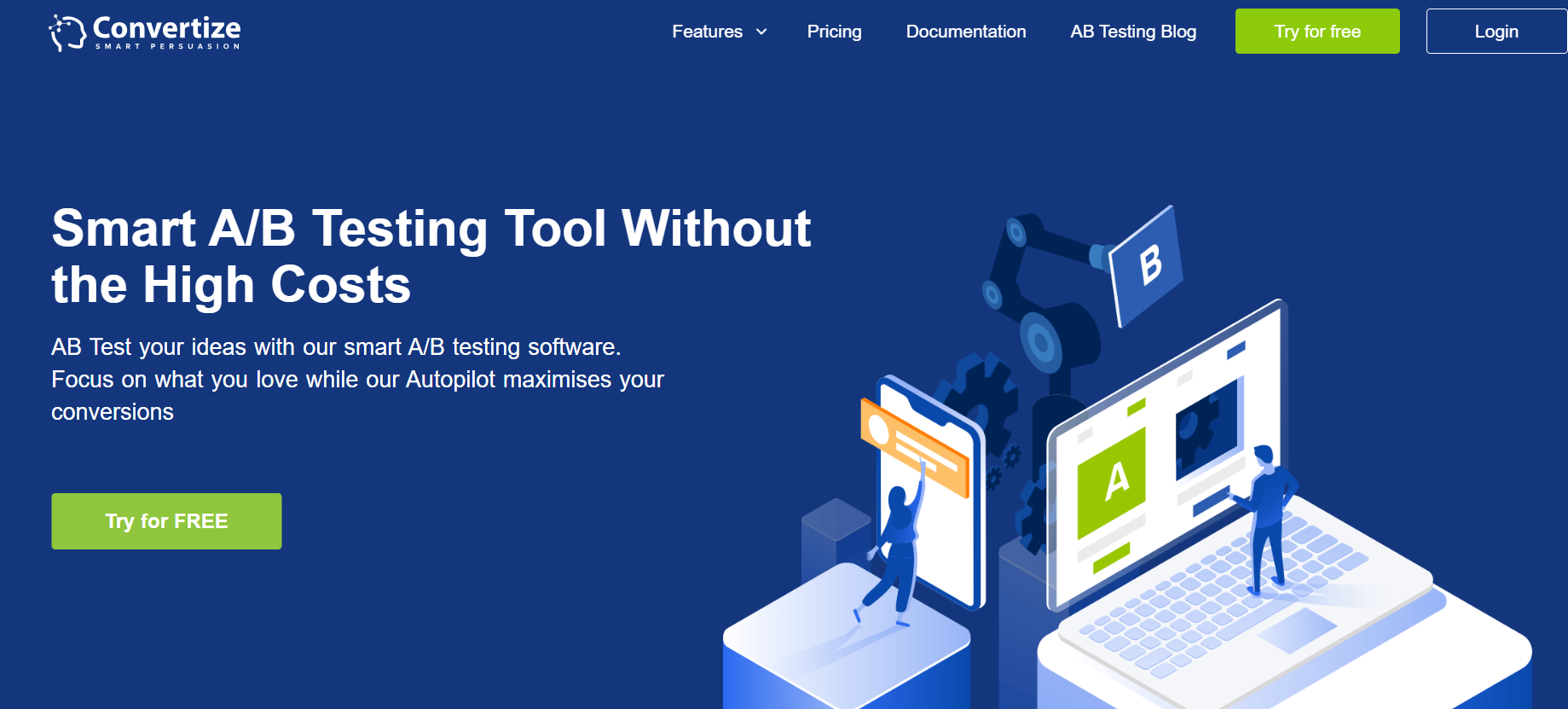
Convertize uses the principles of consumer psychology to guide your A/B testing for Shopify. It doesn’t just give you a tool; it gives you ideas.
Key Features: 250+ optimization tactics based on neuromarketing, an easy “Smart Editor,” and lightning-fast script loading.
Best For: Lean teams that need creative inspiration for their next experiment.
Unique Advantage: The “Autopilot” feature automatically shifts traffic to the winning version as soon as a trend is detected.
7. Dexter
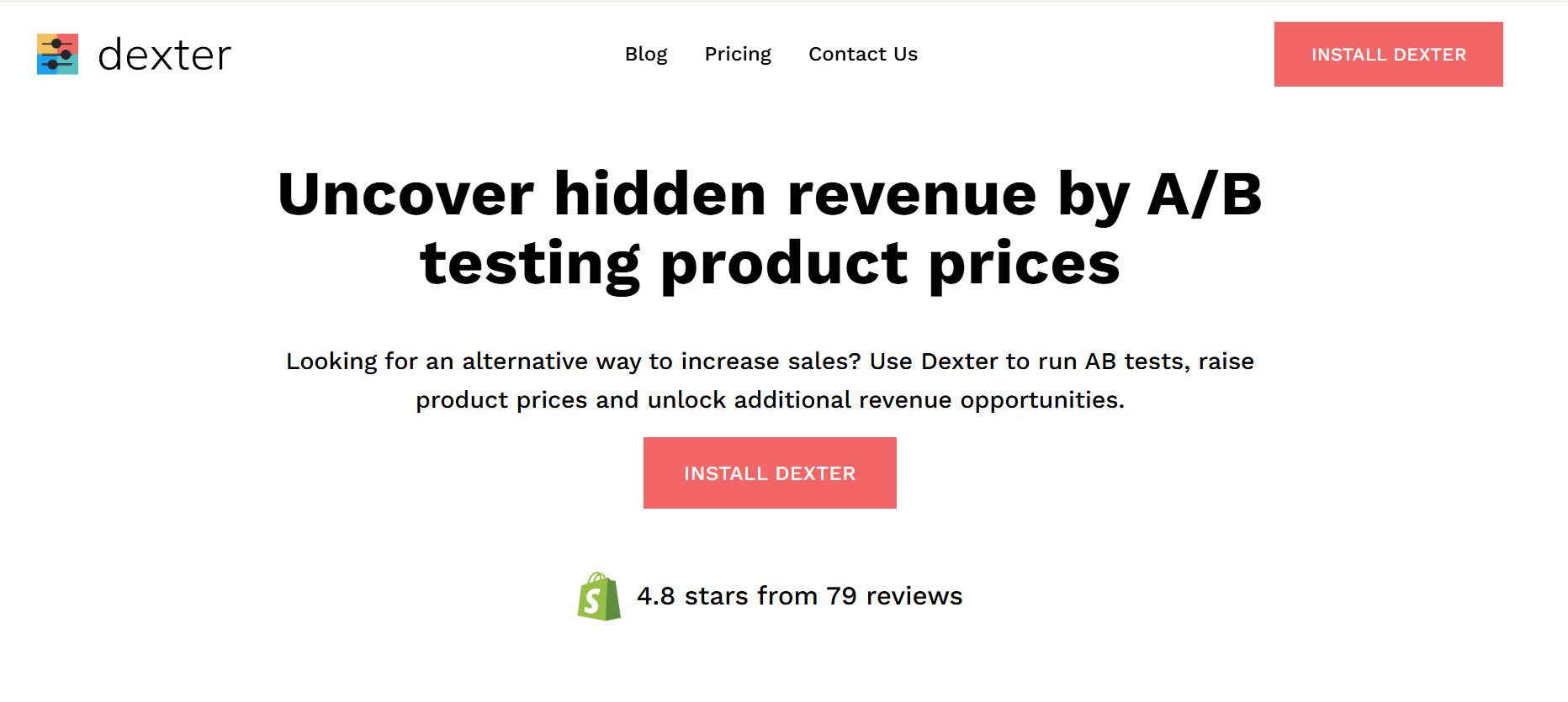
Dexter is a surgical tool designed for one thing: price testing. It is a lightweight app that helps you discover if you are undercharging for your products.
Key Features: 50/50 traffic splits on price points, simple dashboard, and quick-revert functionality.
Best For: Any store owner who suspects their pricing is hindering their growth.
Unique Advantage: It is incredibly affordable and requires zero design skill to use.
8. Crazy Egg
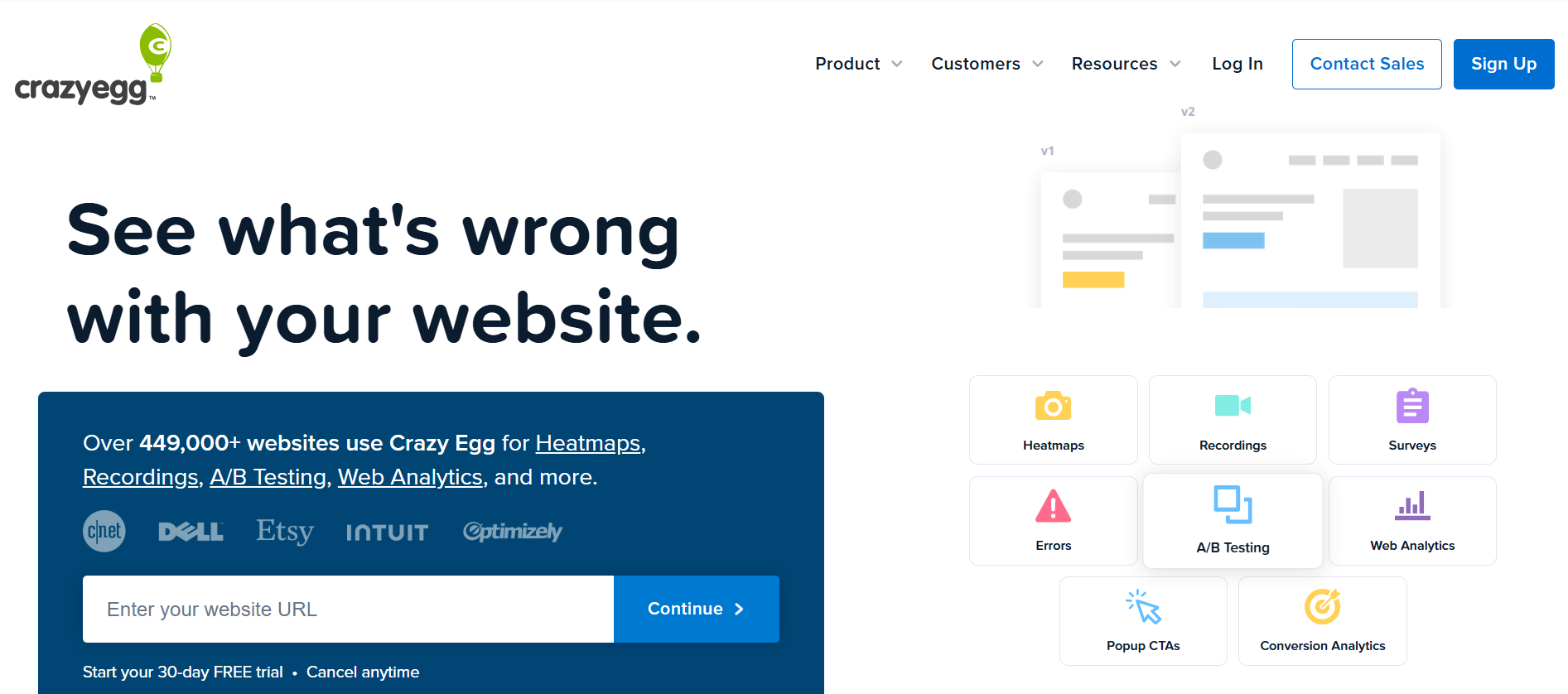
Crazy Egg is a visual analytics powerhouse that helps you understand How to Use Heatmaps and Session Recordings to inform your tests.
Key Features: Confetti maps (showing where specific segments click), scroll maps, and a simplified A/B testing tool.
Best For: Brands that want to see exactly why a customer stopped scrolling before they even launch a test.
Unique Advantage: It provides a holistic view of the user journey by combining visual behavior with hard conversion data.
9. Omniconvert
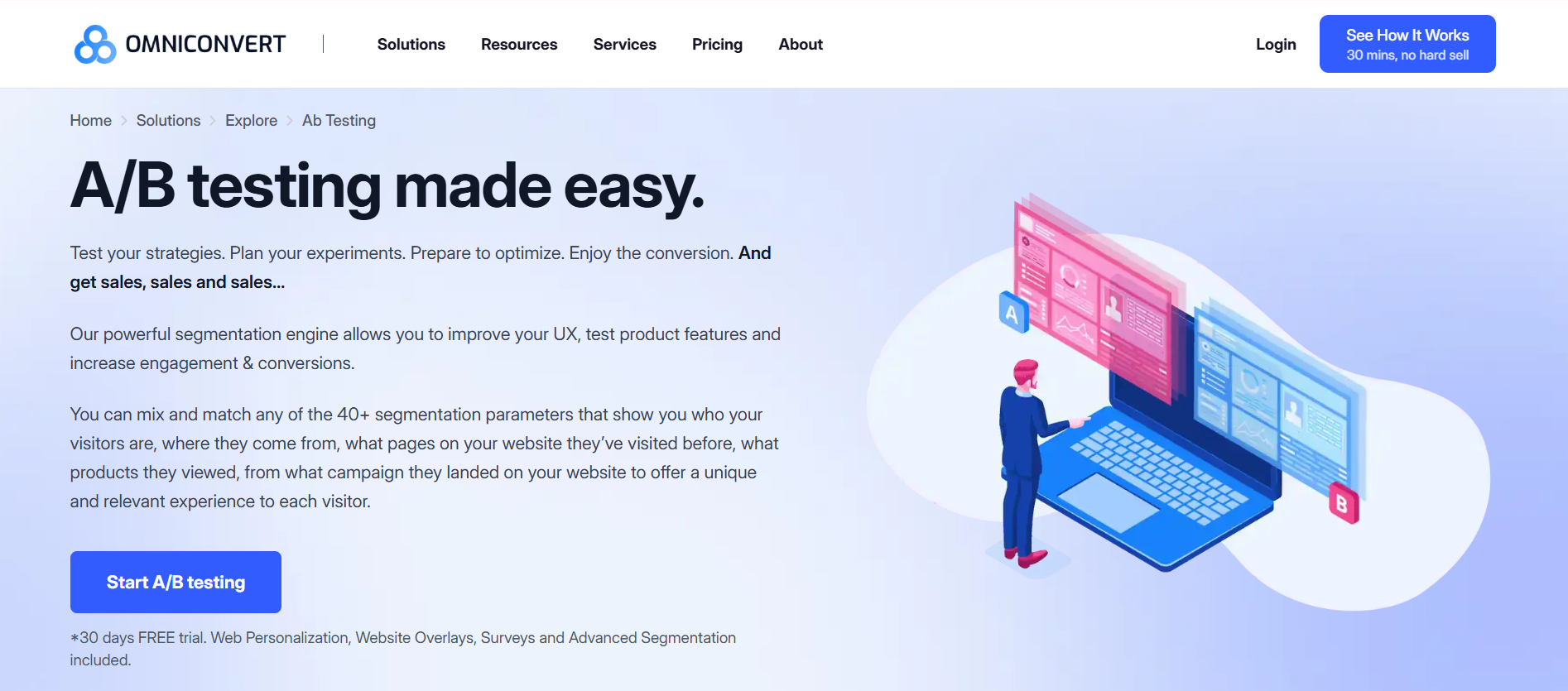
Omniconvert stands out for its focus on retention and Customer Lifetime Value (CLV), not just the first sale.
Key Features: RFM (Recency, Frequency, Monetary) segmentation, exit-intent overlays, and advanced survey tools.
Best For: Subscription-based Shopify stores or those with a high repeat-purchase rate.
Unique Advantage: It allows you to run tests specifically for your most loyal customers without affecting new visitors.
10. Freshmarketer
Part of the Freshworks suite, this tool is designed for businesses that want their marketing, support, and optimization tools to “talk” to each other.
Key Features: Funnel analysis, form analytics, and session replays.
Best For: Small to mid-sized teams that prefer an integrated “marketing cloud” over a disjointed tech stack.
Unique Advantage: It makes it very easy to track how an A/B test on your site impacts later customer support interactions.
11. SplitBase
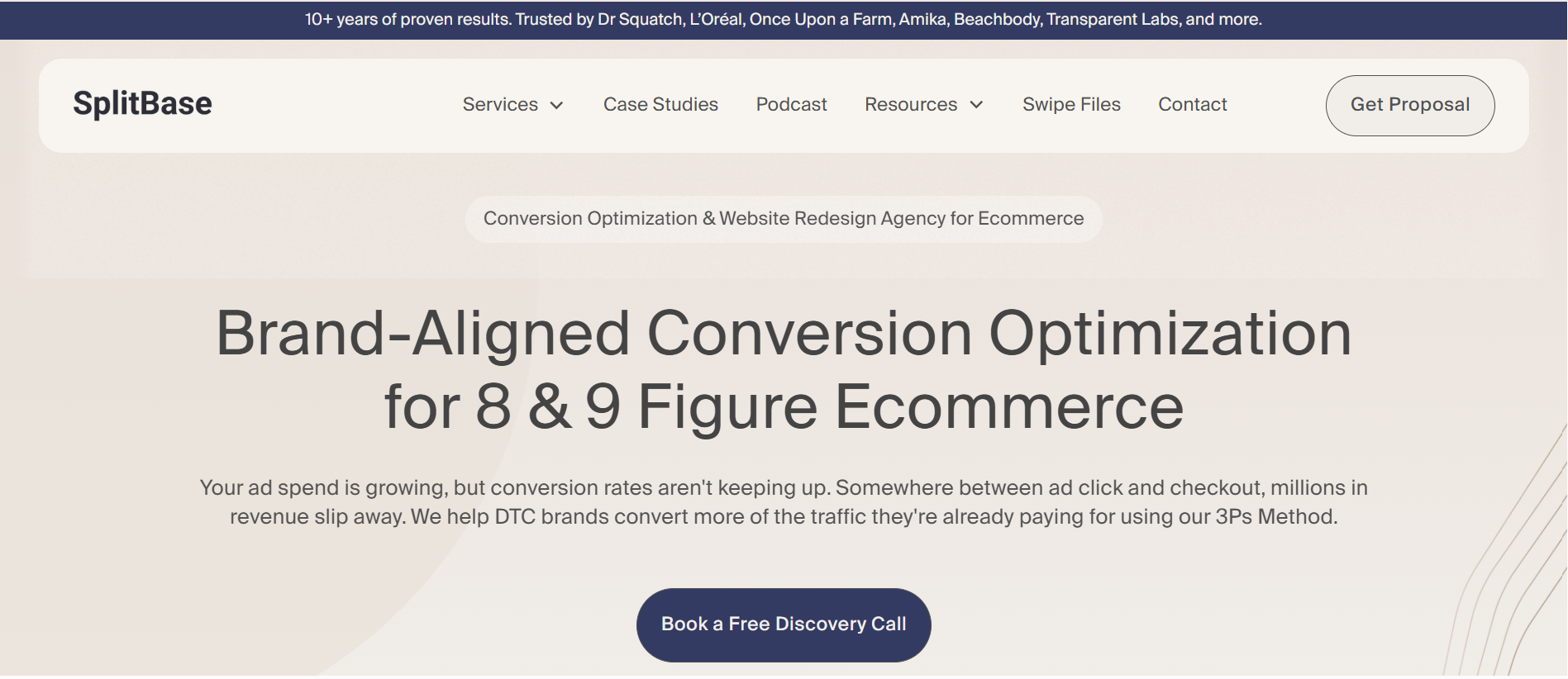
SplitBase operates as a hybrid between a specialized platform and a strategy-focused tool, often used by luxury brands.
Key Features: Qualitative research tools, landing page optimization, and cross-device tracking.
Best For: High-end Shopify Plus brands where brand aesthetic is as important as conversion.
Unique Advantage: Their framework is specifically tailored to “emotional” purchasing triggers rather than just “discount” triggers.
12. Visually
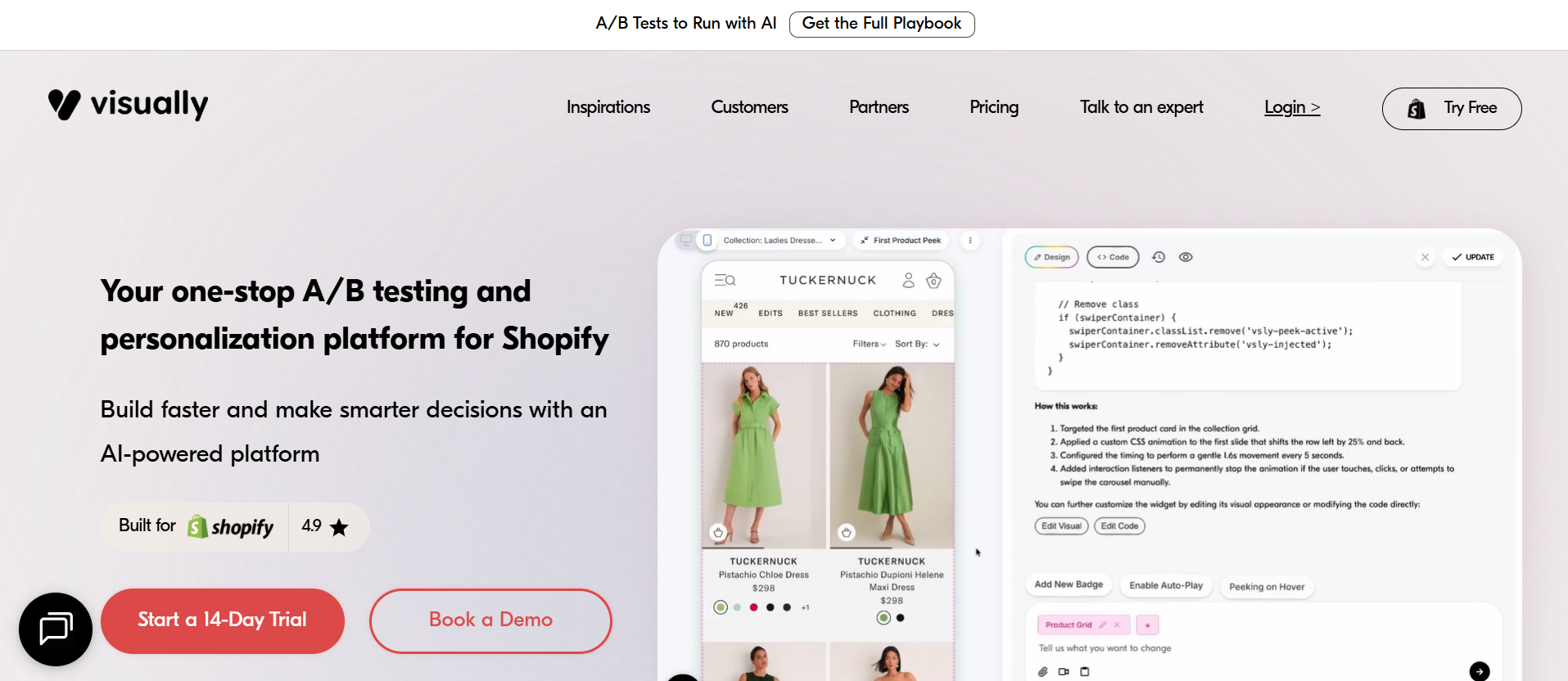
Visually bridges the gap between your paid social ads and your Shopify landing pages.
Key Features: Creative asset testing, landing page iteration, and ad-to-site consistency checks.
Best For: Direct-to-Consumer (DTC) brands spending heavily on Instagram and TikTok ads.
Unique Advantage: It helps you test “congruency” ensuring the message the customer saw in the ad matches the landing page perfectly.
13. Evolv AI (Google Optimize Alternative)
For those looking for a modern best A/B testing tools for Shopify stores after the sunset of Google Optimize, Evolv AI is the future.
Key Features: Machine learning “evolutionary” testing that tries thousands of combinations at once.
Best For: Massive stores with millions of monthly visitors.
Unique Advantage: It can find “winning” combinations of colors, text, and layouts that a human would never have the time to test manually.
14. Kameleoon
Kameleoon is an AI-driven experimentation and personalization platform built for high-growth Shopify stores that want to move beyond simple testing into advanced user experience optimization.
Key Features: Prompt-based experiment creation (AI), feature flagging for developers, 40+ audience segmentation criteria, and “anti-flicker” technology.
Best For: Scaling Shopify Plus stores and mid-to-enterprise level brands.
Unique Advantage: It features “Predictive Targeting,” which uses machine learning to score each visitor’s conversion intent in real-time, allowing you to trigger specific offers only for users who are likely to abandon their cart.
15. Intelligems
If you are looking for tools to increase Shopify sales with A/B testing specifically through financial strategy, Intelligems is the industry leader. It focuses heavily on the “math” of e-commerce.
Key Features: Dynamic price testing, shipping threshold experiments (e.g., $50 vs. $75 for free shipping), and volume discount testing.
Best For: High-volume scaling stores looking to protect margins while increasing AOV.
Unique Advantage: It is the most robust tool for calculating true profit-per-visitor, not just conversion rate.
Tool Comparison: Which One Should You Choose?
The choice of the most appropriate A/B testing tools in the case of Shopify stores is determined by your level of development.
- For Beginners: Neat A/B Testing or Dexter. The tools are centered on pricing, which is the leverage change with the most leverage to make without having to overhaul the design.
- For Growing Stores : Shoplift or Intelligems are perfect. They enable you to experiment with such complicated factors as Free Shipping Thresholds that can have a significant impact on your AOV.
- For Enterprise Brands : You require the strength of VWO or Optimizely. These platforms provide the protection and enhanced segmentation to support millions of visitors in global markets.
To make the implementation successful, use a step by step A/B testing model to make sure the results are valid and actionable.
How to Start A/B Testing Using These Tools
The best medicine to inactive sales is action. It looks like this is how to start your initial test today:
- Identify the Bottleneck: Find where people aren’t converting (it is often the Product Page or Cart) using your Shopify analytics.
- Select Your Tool: Choose one of the above according to your budget.
- Create a Hypothesis: Change the add to cart button to green and more people will press it as it will be more noticeable.
- Set Up the Experiment: Prepare Version B with the visual editor.
- Run the Test: Be sure you have sufficient traffic to attain statistical significance.
- Implement the Winner: After the tool has declared a winner, deploy that change to 100% of your traffic.
In that case, you are new to this, it would be best to read up more on A/B testing for Shopify to prevent typical pitfalls of the platform.
Pro Tips to Get Maximum Results
In order to really increase Shopify sales with A/B testing, you should not stop at just colors of the buttons:
- Test High-Traffic Pages First: There is no use spending time on testing a page that receives 10 visits daily. Begin with your Homepage or most popular Product Pages.
- Focus on High-Impact Elements: Headlines, Hero Images, Pricing, and CTAs (Call to Action) tend to have the largest conversion changes.
- Don’t Stop at One Test: CRO is a process that is continuous. The test is a win, however, since it informs you what your customers do not like.
- Combine Quantitative and Qualitative Data: Monitor what people are clicking during your A/B test using a tool such as Crazy Egg.
- Trust the Data, Not Your Gut: Sometimes the less attractive design is selling better. Allow the customers to make decisions.
Your Next Steps: Turning Data Into Dollars
Selecting the best A/B testing tools for Shopify stores is just the tip of the iceberg, and the actual magic is once you start your first experiment. Don’t let “analysis paralysis” stop you. Begin with a product page that receives a lot of traffic and experiment with a single high-impact variable such as your pricing, or your main CTA.
When you get overwhelmed, you can look at a cro audit to find out what you are leaking the most at first. You can get an expert cro company or a DIY tool such as Neat or Shoplift, but the idea is the same: to quit the guessing and begin growing. Adhering to the step by step A/B testing model and studying how to work with heatmaps and session recordings, you will get some understanding that your rivals are just lacking.