Our online shopping experience has changed into a highly personalised interaction. Those days when a digital storefront was only a stagnant catalog are long gone. Online retailers are the most successful today not because they wait that you will find what you need but they foresee it. By 2026, personalization trends in ecommerce will cease to be more of a nice-to-have in ecommerce, but rather the foundation of a competitive business approach.
Back in the early years of the internet, it would be magical to see your name in the email subject line. Customers are now demanding a lot. They desire an adventure that makes them feel that it was created specifically to them, both the items they encounter on the homepage and the offers they get in their inbox. The modern stores are powered by a combination of both data-driven understanding and CRO-focused design to make sure that each click will take a user a step closer to precisely what they desire. Brands are building digital experiences that are intuitive, helpful, and human by concentrating on the user experience and not just on the final purchase.
Why Personalization Matters in Modern Ecommerce
The bar for customer experience personalization has never been higher. When a shopper lands on a site and sees irrelevant products, they don’t just get bored, they leave. In fact, research shows that nearly 71% of consumers feel frustrated when their shopping experience feels impersonal.
This is why ecommerce personalization is directly linked to business survival. When you tailor the experience, you aren’t just being “nice”; you are actively participating in conversion rate optimization trends. By showing a customer a pair of shoes that matches the style of the jacket they just bought, you are removing the friction of searching and making the “Add to Cart” button much more tempting.
The benefits are measurable:
- Boosted Engagement: Users stay longer on sites that show them what they actually like.
- Higher Loyalty: People return to brands that “get” them.
- Increased Revenue: Companies that master 1:1 personalization often see a revenue lift of up to 40% compared to those that don’t.
Key Personalization Trends in Ecommerce in 2026
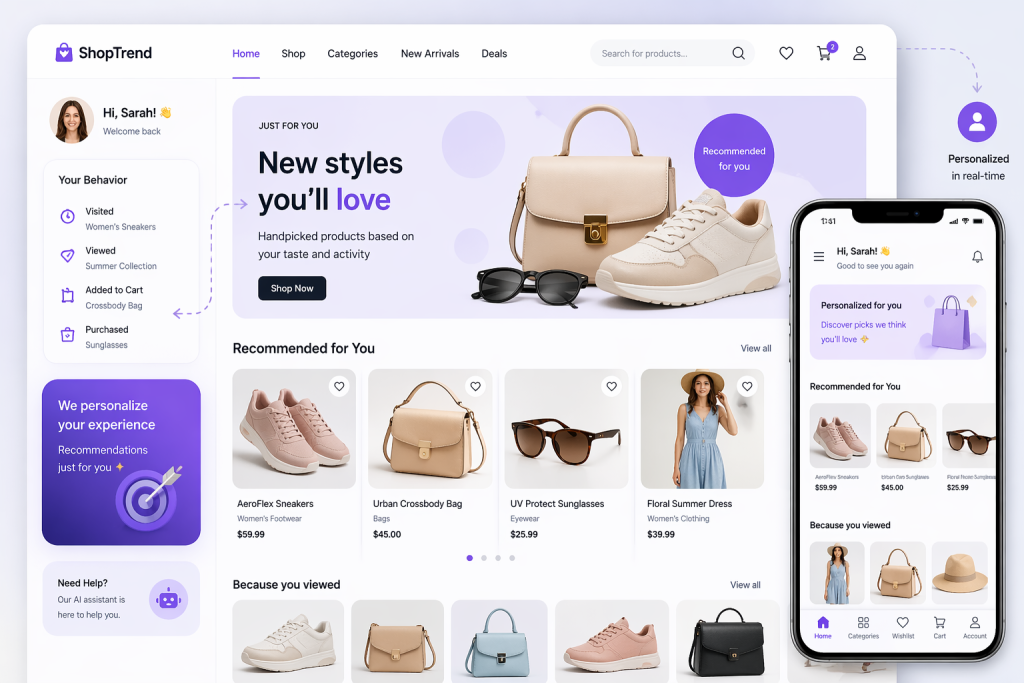
The landscape of personalized online shopping is evolving rapidly. It’s moving away from broad “segments” (like “Women aged 25-34”) and toward “individualized” commerce. Here are the top personalization trends in ecommerce currently dominating the market:
- AI-Powered Product Recommendations: These aren’t just “People also bought.” Advanced algorithms now analyze your real-time intent, weather, and even the device you’re using to suggest the perfect item.
- Hyper-Personalized Search: Using ecommerce psychology, search bars now understand context. If you search for “summer gear,” the results will differ based on whether you live in a tropical climate or are preparing for a vacation.
- Dynamic Pricing: Offers and discounts are becoming individualized. A first-time visitor might see a “Welcome” discount, while a loyal customer might see an exclusive “Early Access” price.
- Behavioral Targeting: If a user hovers over a specific color of a dress but doesn’t buy, the site might automatically switch the homepage banner to feature that exact color during their next visit.
Understanding the “why” behind a purchase is key. By leveraging the principles of human behavior, brands can create a flow that feels natural rather than intrusive.
How AI Is Transforming Ecommerce Personalization
The curtain is powered by Artificial Intelligence. By 2026, AI personalization in ecommerce has evolved beyond the automation phase through to agentic AI systems capable of making decisions in real-time to assist a customer.
To create a personalized journey, AI examines billions of data points beyond purchases, browsing speed, and even a tone of a customer chat query. Personalized social proof is one of the best methods of using this. To illustrate, a Social proof for Shopify store plugin would be more concerned with displaying you reviews posted by individuals sharing your particular issues (such as fits well with tall people) instead of displaying the latest 5-star rating.
Another game-changer is predictive marketing. The AI is now able to know when a customer might run out of a product and send a personalized reminder or a one-click reorder button at the most opportune moment. This will relieve the shopper of the mental burden and keep the brand in mind.
Benefits of Personalized Online Shopping for Businesses and Customers
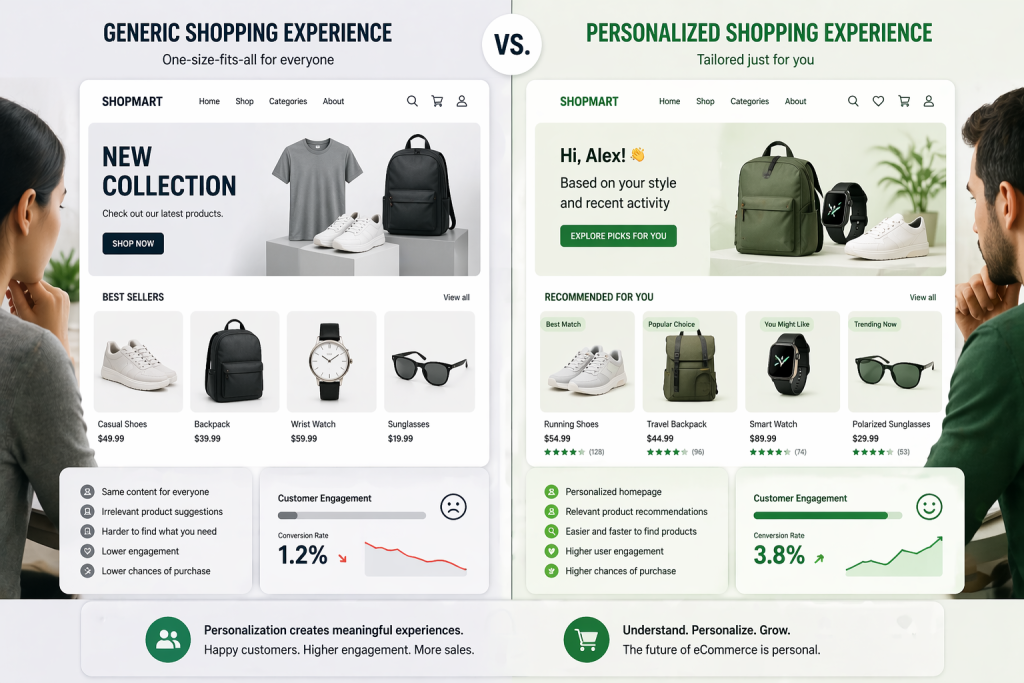
When done right, personalized online shopping creates a win-win scenario. For the customer, it saves time and reduces the “paradox of choice” the stress of having too many options. For the business, it turns a one-time visitor into a lifelong advocate.
A major part of this success comes down to the Psychology of the CTA. A generic “Buy Now” button is okay, but a personalized Call-to-Action like “Complete Your Summer Look” or “Get Your Favorite Roast” (based on past coffee purchases) has been shown to outperform generic ones by over 200%.
The Value of the Personal Touch:
- Average Order Value (AOV): Customers are more likely to add “matching” items suggested specifically for them.
- Retention: 60% of shoppers say they are likely to become repeat buyers after a personalized experience.
- Reduced Bounce Rates: When the first thing a user sees is relevant, they are less likely to hit the “back” button.
Best Practices to Implement Customer Experience Personalization
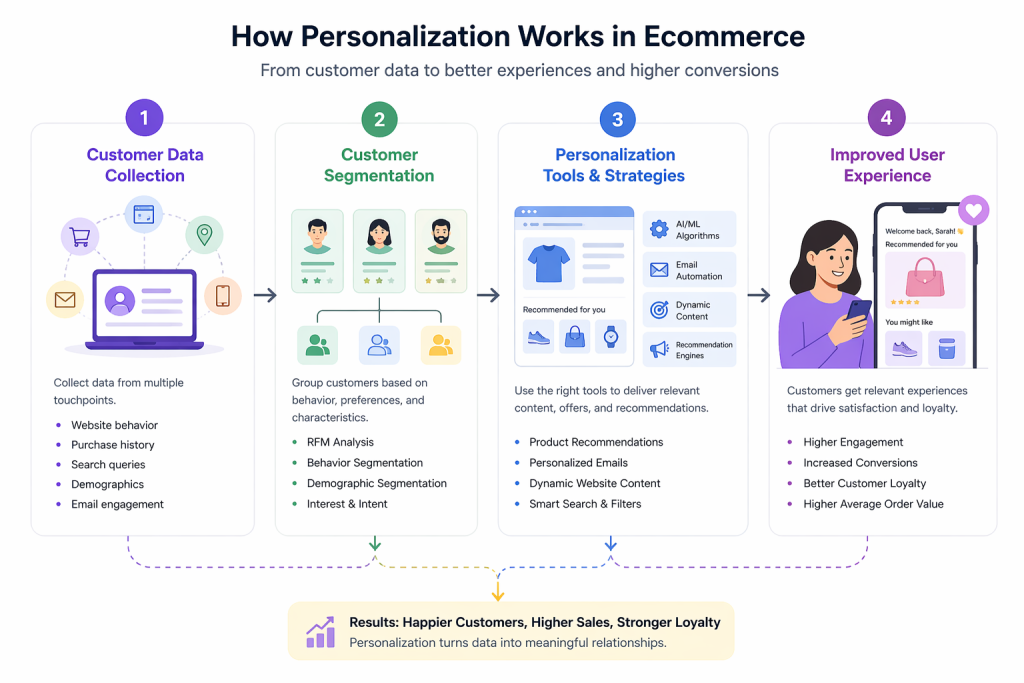
If you’re looking to upgrade your store, you don’t need to change everything overnight. Successful customer experience personalization is built on a foundation of data and testing.
- Prioritize First-Party Data: With privacy laws tightening, rely on the data customers give you willingly through quizzes, accounts, and purchase history.
- Focus on UX Design Trends: Modern UX design trends emphasize “minimalism with a purpose.” Don’t clutter the screen with too many recommendations; instead, place them where they naturally fit into the user’s flow.
- Segment by Intent, Not Just Demographics: A person looking for a gift has different needs than a person looking for themselves. Use behavioral cues to figure out the “why” behind the visit.
- Test and Iterate: What works for a luxury fashion brand might not work for a hardware store. Use A/B testing to see which personalized elements actually drive sales.
Ready to Personalize?
The future of personalization trends in ecommerce are evident: the most successful brands will be the ones that perceive all the customers as a market of one. The use of technology, such as AI and machine learning, has enabled delivering the same level of service, previously available to the exclusive boutiques, to millions of individuals at a time.
In the future, the boundary between technology and human-centered design will keep on being blurred. In order to remain relevant, companies will have to go beyond mere strategies and adopt a comprehensive strategy that integrates information, psychology, and gorgeous design. It may seem like a daunting task, but by beginning small, maybe with a smarter recommendation engine, or a tailored CTA, you can start creating the kind of shopping experience that customers today not only desire, but need.
What do you see as the greatest difficulty in making your online store appeal to all kinds of shoppers?